


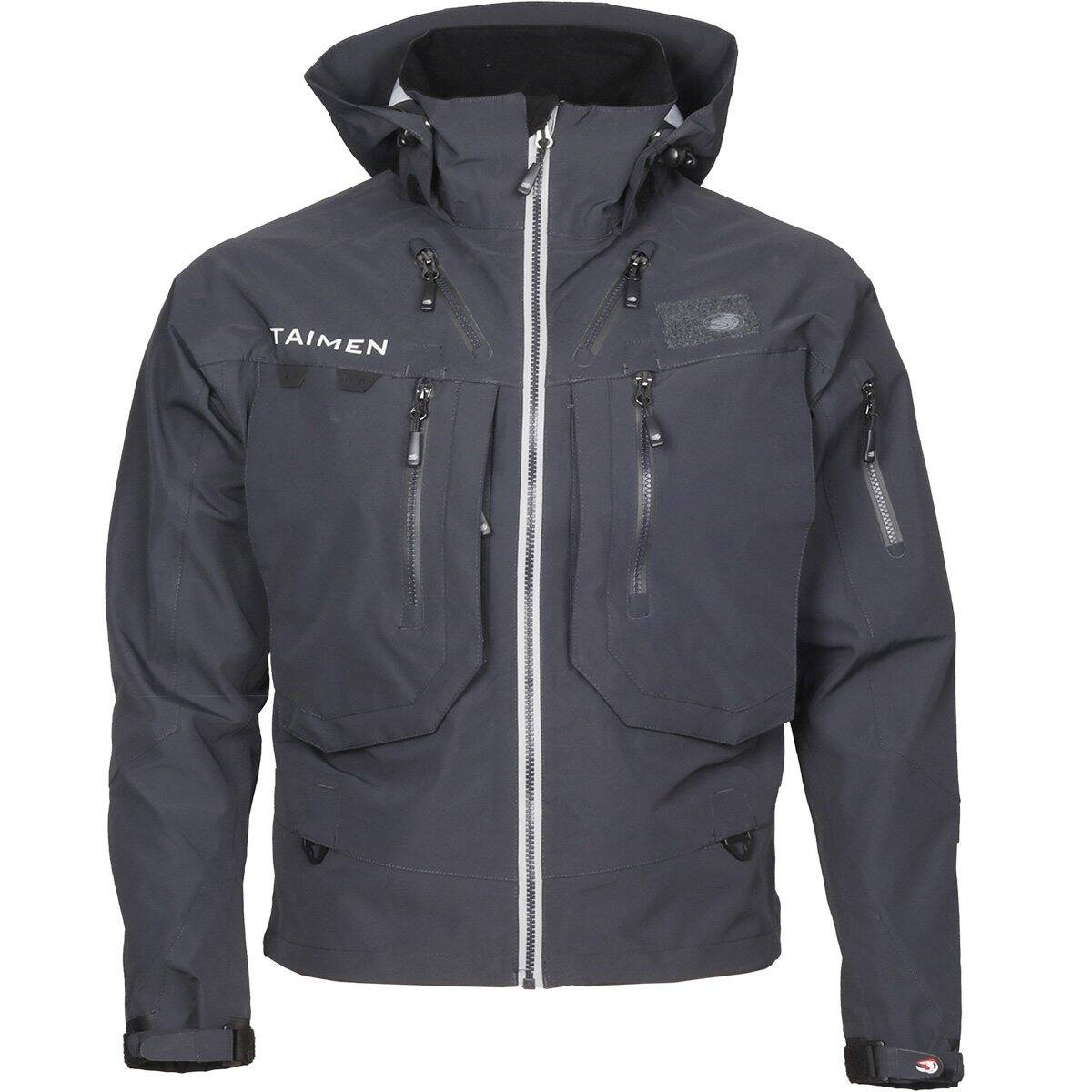


Taimen Kolyma Wading Jacket - Dk. Gray
Size Charts
Jackets
| Size | Your chest circumference | Circumference of the jacket measured at chest height | Circumference at the bottom of the jacket | Back length of the jacket | Sleeve length |
|---|---|---|---|---|---|
| XS | 89-94 | 102 | 98 | 65 | 60.5 |
| S | 95-100 | 107 | 103 | 67 | 62 |
| M | 101-106 | 112 | 108 | 69 | 63.5 |
| L | 107-112 | 117 | 113 | 71 | 65 |
| XL | 113-118 | 122 | 118 | 73 | 66.5 |
| 2XL | 119-124 | 127 | 123 | 75 | 68 |
| 3XL | 125-130 | 132 | 128 | 77 | 69.5 |
Facts:
• 3-layer membrane
• 100% waterproof and windproof.
• High breathability.
• 9 pocket including:
2 side pockets lined with microfiber inside and zippered.
4 chest pockets for even large boxes.
2 pockets for electronics, leaders high on the chest.
1 pocket on the sleeve.
• Retractable hood.
• D-ring for wading stick.
• 2 hooks for accessories.
• D-ring for landing net.
1. Choose the right size and check the fit before use
Choose the size according to the model's size chart. Check the fit by trying the jacket on over the actual underlayers you will use with it and fastening it. Check freedom of arm movement and whether the material is under excessive tension at the back, under the arms or at the joins. Adjust the cuffs, hem and hood if the model has those adjustments. A jacket that is too tight can restrict movement and cause excessive strain on the material and joins. One that is too loose can form folds and increase rubbing, accelerating material wear.
2. Clean the jacket after use.
Gently remove mud, sand and other dirt with a sponge or soft cloth. After contact with salt water, rinse the dirty areas with clean fresh water. Do not use hard brushes or a pressure washer.
3. Prepare the jacket for washing.
Empty the pockets and detach any attached accessories. Close the zips and hook-and-loop fasteners as instructed by the care label. Remove grit and dirt from the fasteners to reduce wear.
4. Wash according to the care label
Wash the jacket in lukewarm water. Use a detergent intended for membrane garments and suitable for the material. Follow the temperature and washing method recommended on the label. Do not use fabric softeners, bleach or solvents. Rinse out detergent residue thoroughly.
5. Dry the jacket completely.
Dry the jacket completely in a well-ventilated place, protected from intense sunlight and away from heaters and other sources of high heat. Use a tumble dryer or iron only if permitted by the care label, and follow the stated settings.
6. Zipper care
Regularly remove grit, mud and other dirt from the zipper elements and slider area using clean water and a soft brush or cloth. After contact with salt water, rinse the zippers with fresh water and leave them to dry. Open and close them smoothly, without jerking or using excessive force. Check that the jacket fabric or underlayers do not get caught between the zipper elements. If a zipper jams, slide the slider back and gently clear the obstruction. Do not force the slider through. Do not use arbitrary oils, greases or solvents. Use zipper-care products only if they are suitable for the particular type of zipper and according to their usage instructions. Repair a damaged zipper or use a professional repair service.
7. Maintain the outer-fabric treatment.
If water stops beading and begins to soak into the surface, clean the jacket first, then renew the DWR treatment if needed with an agent appropriate to the model. Activate the treatment with heat only if the jacket's instructions permit it. The treatment does not repair a damaged membrane or fabric joins.
8. Store in a dry, ventilated place.
Store the jacket only when it is completely dry, preferably hanging freely. Do not store it damp in a closed bag or tightly compressed for a long time. Avoid hot cars, heaters and sunny locations. Prolonged moisture and high temperatures may accelerate the degradation of materials and joins.
9. Respond to the first signs of wear
Regularly inspect the fabric, seam taping, cuffs and zips. Repair any damage before further use. Do not wait until abrasion, delamination or a zip problem leads to a larger failure. For repairs, use methods and materials intended for repairing membrane garments, or use a professional repair service.