


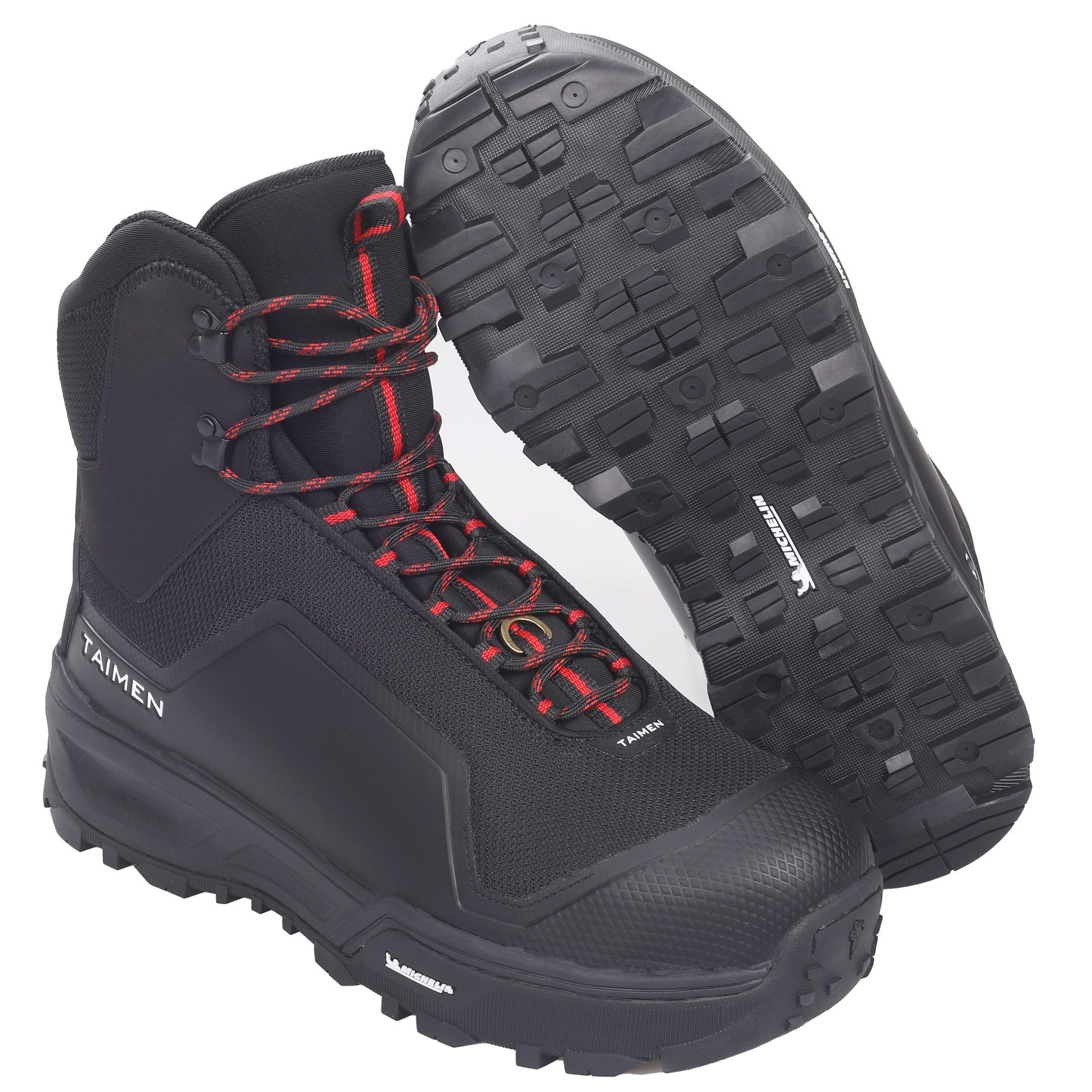


Taimen Ongi Wading Boots
Size Charts
Taimen shoe sizes are based on US shoe sizes.
To properly choose the size of the shoe for your foot, you need to consider the neoprene sock. In practice, this means ordering a shoe one size larger than your everyday shoe size.
To do this, select the Taimen shoe size (Taimen Size based on US) and find the corresponding size in the table.
For example: If you normally wear size 42 (EU) shoes, you should choose size 10.
| Size (based on US sizes) | Shoe number | Foot length in cm | Insert length in cm (total length inside of boot) |
|---|---|---|---|
| 8 | 39 1/2 | 25 | 27 |
| 9 | 41 | 26 | 28 |
| 10 | 42 | 27 | 29 |
| 11 | 43 1/2 | 28 | 30 |
| 12 | 45 | 29 | 31 |
| 13 | 46 | 30 | 32 |
If you cannot find the correct shoe size, you can use a shoe insert that reduces the size by about half a size.
We are pleased to present the unique features of our Taimen Ongi Wading Boots, which combine technological innovations with the needs of fly fishermen, providing unparalleled functionality and thoughtfully engineered construction for wading.
Key Features of wading boots Taimen Ongi:
- Innovative sole by Michelin for Fly Fishermen: This sole, designed with fly fishing in mind, stands out for its exceptional grip - it is 40% better on wet surfaces compared to other market solutions and uses an abrasion-resistant rubber compound.
- Sole by Michelin Tire Tread in the Sole: Thanks to the thoughtfully designed tread pattern, inspired by Michelin tire technology, the boots have an extended contact area with the ground, supporting solid stability and effectively distributing pressure while minimizing shocks.
- Advanced Dual-Component Midsole: Inside the midsole, there is a specially designed plate that increases the torsional stability of the footwear and supports more effective spike retention.
- Comfortable and Durable Midsole: Offering better sensations when in contact with the riverbed, this sole uses a wear-resistant material compared with standard EVA models.
- 28 sockets for studs: Each sole of the Taimen Ongi Wading Boots is equipped with 14 sockets for screwing in wading studs. These sockets are strategically placed to provide optimal traction and stability, enhancing the safety and performance of the boots in various wading conditions.
- Innovative TPU Film: The use of reinforced TPU film in areas prone to friction provides abrasion resistance and flexibility, while maintaining the lightness of the boot.
- Quick-Drying Fabric: The use of highly permeable fabric supports wearing comfort while maintaining a lightweight feel suited to demanding wading.
- Lighter Construction: Thanks to the modern construction and materials, the boots are lighter, which increases comfort during use, especially during long fishing trips.
- Stability and Reinforced Areas: Special reinforcements in critical points of the boot strengthen these areas. A full protective toe cap inside the boot and heel stiffening support stability and safety during use.
- Ergonomic Design: The anatomical design of the boot supports comfort in various fishing conditions.
Experience and Comfort at the Highest Level! The Taimen Ongi Wading Boots are a combination of innovation, functionality, and comfort. Thanks to the sole by Michelin shared with the Uchur model, they provide unparalleled stability and grip, making them the ideal choice for any fisherman who values the highest quality and performance.
1. Sizing and fit check before use
Choose the size according to the actual model’s size chart. Check the fit when trying them on: put on both boots with the waders and socks you will use when wading, and adjust the lacing evenly. Check that your toes have room to move without pressing against the front of the boots, that the heels remain stable, and that the neoprene socks do not bunch up inside. Boots that are too tight may cause pressure and excessive strain on the materials and joins. Boots that are too loose may increase friction, accelerating wear to the lining and neoprene socks.
2. Cleaning After Use
After every use, rinse the boots with clean water, removing mud, sand and plant debris. After contact with salt water, rinse them thoroughly with fresh water. Also clean the interiors, tongues, laces, eyelets, lace hooks and surrounding areas. Check that the water drainage openings are clear. Gently remove dirt with a soft brush.
3. Washing and Cleaning Products
We recommend hand-cleaning in lukewarm water. If necessary, use a mild cleaner suitable for the materials from which the boots are made, and rinse out any residue thoroughly. Do not use bleach, solvents or aggressive cleaning products. Do not machine-wash the boots or use a pressure washer. Choose care products for the particular model; products intended for natural leather are not necessarily suitable for synthetic materials.
4. Drying
Loosen the laces and open the tongues to allow air to circulate. If the insoles are removable, remove them and dry them separately. Thoroughly dry the interiors, uppers and soles. Dry the boots in a well-ventilated place, in the shade, away from heaters, fire and other heat sources. Do not speed up drying with hot air.
5. Sole Care
Regularly remove dirt from the tread. On models with felt soles, thoroughly rinse and gently clean the felt, then leave it to dry completely. Before moving to another fishing water, clean and dry the whole pair of boots to reduce the transfer of aquatic organisms between waters. Rinsing alone does not replace disinfection required at that fishing water.
6. Laces and Studs
Loosen the laces before putting the boots on and taking them off. Do not take a boot off by standing on its heel with the other boot. If studs are used, regularly check their fastening and wear. Use only studs compatible with the particular model and sole, as instructed. Screws that are too long may damage the boot.
7. Storage and Protection from Overheating
Store the boots clean and completely dry in a cool, well-ventilated place. Do not leave them in a hot car, near a heater or in direct sunlight. Do not seal damp boots in a bag or container. Heat and moisture can accelerate material degradation and damage bonded joints.
8. Inspection and repairs
Regularly inspect the uppers, seams, reinforcements, eyelets, hooks and the sole attachment. Respond to the first signs of damage: wear, cracks, loose parts or sole separation. Replace worn laces and studs. Repair damage before further use or contact TAIMEN service. Do not wait for the damage to grow — continued use can make repair more difficult. Use repair methods and materials intended for wading boots or use a professional repair service.
Save by buying more

Taimen Orhon TIZIP Waders + Taimen Ongi
